




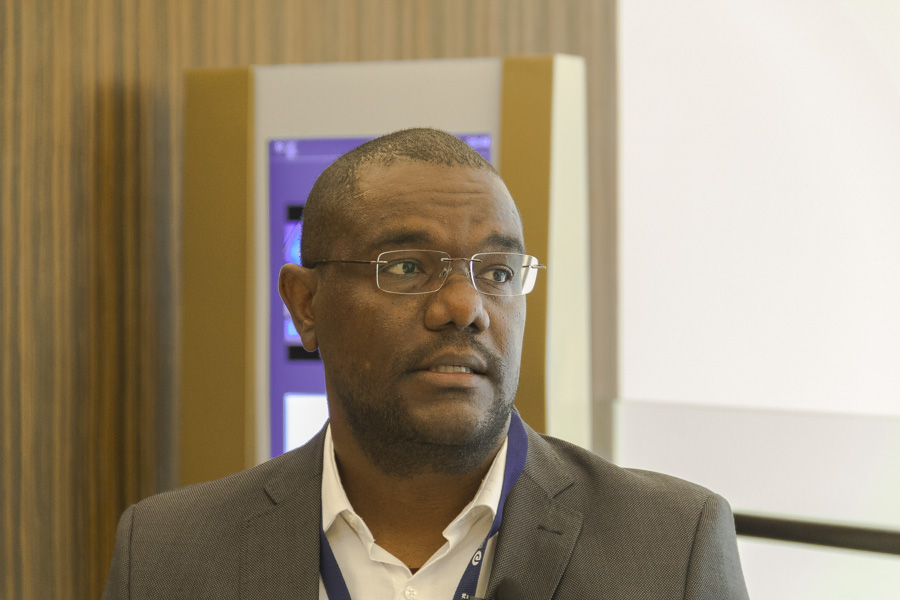
Subscreva o canal oficial da Revista Economia & Mercado no YouTube, onde poderá encontrar mais conteúdos de interesse público. Assista a entrevista cedida pelo presidente da Associação Agro-Pecuária de Angola, Wanderley Ribeiro, em (26) Wanderley Ribeiro, Presidente da AAPA - YouTube ou em (26) (AO VIVO) V CONFERÊNCIA E&M SOBRE AGRICULTURA - YouTube
Como caracteriza o sector agrícola em Angola, considerando que, desde 1973, o país o subalternizou para dar primazia ao petróleo?
Um gigante enfraquecido caracteriza bem a realidade actual do sector agrícola em Angola. A potência agrícola que o país representava na década de 70 é, hoje, desconhecida pela maioria das pessoas, sobretudo pela juventude que representa em torno de 80% da nossa população. É um registo ainda muito presente na memória de quem viveu esta parte da nossa história e, actualmente, procuram por mensageiros a quem possam passar o testemunho. E é precisamente esta passagem de testemunho que nos falta, que nos fale sobre os fundamentos que fizeram de Angola a potência agrícola registada nos anais da história.
“Gigante enfraquecido”?
Sim. Algumas das razões que me levam a caracterizar o sector como gigante enfraquecido: a nossa área de produção mantém-se em torno de cinco milhões de hectares há quase duas décadas. A investigação científica não tem participação activa no desenvolvimento do sector. Os indicadores de importação, apesar de terem oscilado durante os anos da Covid 19, parecem caminhar no sentido crescente da retoma das suas posições anteriores. A agricultura familiar é caracterizada pelas taxas de produtividade mais baixas da África Subsaariana. A taxa de utilização de mecanização agrícola no sector é de 4%, sendo a grande maioria afecta à agricultura empresarial; e a taxa de penetração dos serviços de microcrédito para a agricultura familiar é inferior a 1%.
Hoje ficámos apenas com o “potencial”…
Hoje, Angola é conhecida como o país do potencial, todos que por aqui passam afirmam o mesmo, uma terra de muito potencial em diferentes sectores, sendo o da agricultura o que mais se destaca pela imensidão de recursos naturais com que somos abençoados, formando assim a harmonia quase perfeita dos elementos necessários para sermos potência. Entretanto, entre o potencial e a potência, existe um importante caminho a percorrer. O potencial é o que podemos ser, aonde podemos chegar, mas numa dimensão virtual. A potência é a capacidade de criar, produzir, gerar energia, transformar, e esse é um sentimento real que a agricultura angolana viveu naquela época. Porém, saiba que Angola pode atingir a auto-suficiência na produção de milho nos próximos quatro anos (economiaemercado.co.ao)
Enquanto isso, o petróleo comanda?
A indústria petrolífera é, hoje, o motor da nossa economia. Embora a pauta da diversificação económica exista desde a década de 80, penso que hoje Angola pode criar uma ponte estratégica entre estes dois sectores, não só na transferência de recursos financeiros para potenciar a agricultura, mas também nos modelos de gestão e de investimento. Eu sou um produto da indústria petrolífera e sei o que a casa gasta. É uma indústria extremamente padronizada, rigorosa, exigente em matéria de competências técnicas e no investimento para o desenvolvimento destas competências, ou seja, podemos ser suficientemente disruptivos ao ponto de usar a fórmula do Oil & Gás no agro-negócio, com os devidos ajustes do contexto sectorial.
Qual é a sua expectativa em relação ao sucesso do PLANAGRÃO?
O sentimento é de grande expectativa, e aqui falo em nome da classe empresarial que vê no PLANAGRÃO a resposta que o sector precisava com condições de financiamento mais compatíveis com a realidade do país. Entretanto, seria utópico olharmos para este plano somente numa perspectiva de financiamento, pois os problemas do sector não se resolvem só com financiamento às empresas. O buraco é mais fundo. O PLANAGRÃO deve despoletar um mecanismo de revisão estrutural no sector com participação intersectorial, como a revisão da Pauta Aduaneira, mapeamento e priorização das estradas a intervencionar, fomento de insumos produzidos em Angola (sementes, remineralizadores de solo, correctivos de solo), lançamento do seguro agrícola, modernização institucional do órgão de tutela, retoma da investigação científica, reestruturação dos centros de formação profissionais e faculdades específicas do sector, para citar só alguns.
Leste é o caminho?
Leia o artigo completo na edição de Março, já disponível no aplicativo E&M para Android e em login (appeconomiaemercado.com).
“The sector’s problems cannot be solved only with financing for companies”
Wanderley Ribeiro, the president of the Associação Agro-pecuária de Angola (AAPA, or Angolan Agricultural Association in English), defines inputs as the greatest weight in the sector’s production cost structure, which is struggling with a series of problems. In his view, they “cannot be solved only with financing for companies,” because "the hole is deeper.”
How would you characterize the agricultural sector in Angola, considering that, since 1973, the country has relegated it to an afterthought in order to focus almost exclusively on oil?
The current reality of the agricultural sector in Angola can be compared to that of a weakened giant. The agricultural powerhouse that was Angola in the 70’s is unknown by most people today, especially the youth, who represent around 80% of our population. It’s a reality that is still very present in the memory of those who lived through this part of our history, and today they are looking for messengers to whom they can pass on their testimony. And it is precisely this passage of testimony that we lack, which tells us about the fundamentals that made Angola the agricultural power recorded in the annals of history.
“Weakened giant”?
Yes. Here are some of the reasons that lead me to characterize the sector as a weakened giant: our production area has remained around five million hectares for almost two decades, scientific research has no active role in the sector's development, import indicators, despite having fluctuated during the Covid-19 years, seem to be moving towards an increasing recovery from their previous positions, family farming is characterized by the lowest productivity rates in sub-Saharan Africa, the rate of the use of agricultural mechanization in the sector is 4%, with the vast majority allocated to corporate agriculture; and the penetration rate of microcredit services for family farming is less than 1%.
Today we are left with only the “potential”…
Today, Angola is known as the country of potential, everyone who passes through here says the same, a land of great potential in different sectors, with agriculture being the one that stands out the most due to the immensity of natural resources with which we are blessed, thus forming the almost perfect harmony of the elements necessary to be an agricultural powerhouse. However, between having potential and being a power, there is an important path to follow. Potential is what we can be, where we can reach, but in a virtual dimension. Power is the ability to create, produce, generate energy, transform, and this is a real feeling that Angolan agriculture experienced at that time.
Meanwhile, oil rules!
The oil industry is today the engine of our economy. Although the economic diversification agenda has existed since the 1980s, I think that today Angola can create a strategic bridge between these two sectors, not only in the transfer of financial resources to boost agriculture, but also in management and investment models. I am a product of the oil industry and I know what the household spends. It is an extremely standardized, rigorous industry, demanding in terms of technical skills and investment in the development of these skills. In other words, we can be sufficiently disruptive to the point of using the oil & gas formula in agribusiness, with the necessary sector context adjustments.
What are your expectations regarding the success of PLANAGRÃO?
The feeling is one of great expectation and I speak here on behalf of the business class that sees in PLANAGRÃO the answer that the sector needed with financing conditions more compatible with the reality of the country. However, it would be utopian for us to look at this Plan only from a financing perspective, as the sector's problems cannot be solved only with financing for companies, the hole is deeper. PLANAGRÃO should trigger a structural revision mechanism in the sector with intersectoral participation, such as the revision of the Customs Tariff, mapping and prioritization of roads to be repaired, promotion of inputs produced in Angola (seeds, soil remineralizers, soil correctors), launch of agricultural insurance, institutional modernization of the supervisory body, resumption of scientific research, restructuring of professional training centers and sector-specific faculties, to name just a few.
Is the East the answer?
Read the full article in the March issue, now available on the E&M app for Android and at login (appeconomiaemercado.com).

.jpeg)

.jpg)